Rebecca; Middlemarch

It’s been a while since I watched these two (yes, sorry, watched, not read): the 1940 Hitchcock film and the 1994 BBC Middlemarch.

Continue reading
Posted in Film, Stuff, TV | Tagged , | Leave a comment

Scrapper; Not That Radical

Charlotte Regan’s film and Mikaela Loach’s book seem, as so often, rather different kinds of thing, put together here, by, as Sting has it, the sacred geometry of chance. A quirky magic-realist film about a bereaved 12-year-old meeting her hitherto unknown father, and a young woman in her twenties issuing an impassioned call to climate activism… Mmmm…

Continue reading
Posted in Film, Reading | Tagged | Leave a comment

My Name is Alfred Hitchcock; Drive Your Plow over the Bones of the Dead

{Welcome back double-blog!}

Two great pieces to start: seemingly unrelated, but then on closer inspection…

Continue reading
Posted in animal rights, Film, Novel, Stuff | 1 Comment

rodin and the ancient greeks, & the iliad

rodin and the ancient greeks

i didn’t realise that rodin was in london a lot, and kept visiting the british museum to see the elgin marbles and other greek sculpture; seems (at least according to the bm’s materials) that this was his primary source of inspiration

Continue reading

Posted in Exhibition | Tagged , , | Leave a comment

Review of Carl Safina: Beyond Words: What animals think and feel

The Quaker Green politician Rupert Read once told me that he gets through boring meetings by imagining the participants stark naked and preening each other like apes. After reading Carl Safina’s book (available in many editions; first published in 2015) I too have been seeing the behaviour of my fellow humans, including myself, as strikingly similar to that of the animals he writes about. I tend to define as ‘great’ any book or film which makes me think differently, which rewires me, so this book, according to that definition, is a ‘great’ book.

Safina is passionate about conservation. He founded and runs the Safina Center, in his words ‘a unique collective which is the creative end of the conservation-group spectrum’. ‘Facts alone can’t save the world. Hearts can. Hearts must. We’re working to make sure that hearts do.’ And he seems to be doing just this, making a difference. He’s written many books, presented TV series, and written for publications like the Guardian. His TED talk, “What are animals thinking and feeling?”, has been viewed over two million times, and is a great place to pick up quickly the book’s message. And for Quakers, his enthusiasm for engaging with creativity and the emotions, and even, if occasionally and with caution, the spiritual, gives his book a special resonance.

My expectations were high – the Washington Post trumpets ‘Once in a long while, a book is published that felicitously combines lambent writing with dazzling facts, while also illuminating our knowledge….Beyond Words by Carl Safina…is one of these exemplary books’, and, across the top of the book’s front cover, the New York Review of Books proclaims ‘Along with Darwin’s Origin of Species and Richard Dawkins’s Selfish Gene, Beyond Words marks a major milestone in our evolving understanding of our place in nature.’ I’m too ignorant of the field to judge these claims, but, if the book’s effect on me is evidence, they may well have substance.

The book itself is cleverly constructed for maximal effect. It’s in four sections – elephants, wolves, theory and whales. The three species-sections are fascinating accounts of these animals’ lifestyles and behaviour, which bring out Safina’s thesis that non-human animals have inner lives much more like our own than we think. His approach is to see animals as named individuals, not just anonymous performers of social roles: his question to them is “WHO are you?”. Safina cleverly uses these beautifully written eye-witness accounts of wild animals as bait – the reader is willingly seduced into more technical areas. These sections of the book are full of painfully sad details of how animals have suffered, and are suffering, from the ignorance and greed of humans, but our inevitable despair is counterbalanced by the sheer scale, variety and power of his revelations about animal behaviour, thought and personality.

The third section, on theory, is in some ways the book’s core. His chief target is academia’s alleged blindness in dealing with the question of whether non-humans have a ‘theory of mind’. (This phrase, in its technical sense, is about whether a being has an awareness of another being’s thoughts – whether it can take decisions based on calculations of what the other guy might be thinking.) Safina is impatient with academic philosophers, claiming that the answer to this question is so obviously ‘yes’ that it’s daft to ask it: from a sandpiper tricking a pursuing peregrine, to his own dog rolling over to ask for a tummy stroke, his examples are many and various.

Safina packs his book with examples of incredible behaviours from individual animals – I have highlighted so many in my copy that I don’t know where to start. But the editor has given me space in the print version of this review for one example (more online): two captive killer whales puzzled observers by, in the hour between dawn and the actual sunrise, squirting water and licking a small spot on the inside glass of their tank, near the water line. Then someone noticed that the sun’s first rays hit that spot exactly. And parrots give their chicks individual, phonically differentiated, names. (That’s two: shhh!)

Beyond Words is extremely readable, and very well produced (it has a great index and is fully referenced). And it is extremely important.

online extras

There are three main areas, I think, where Safina uses real-life examples to push our understanding of animal minds: sympathy, art, and what I can only call telepathy.

This last, ‘telepathy’, is something Safina himself, as a scientist, is unhappy about, and leaves as implied, not directly stated: he doesn’t want to reach certain conclusions, and seeks alternative explanations. Some dolphins used to regularly swim round a researchers’ boat; one day they approached but stayed at a distance, and didn’t do their usual frolicking; no one could work out why, until the news came up from below that one of the people on board had died.

Safina posits three degrees of fellow-feeling: empathy – feeling the same emotion as another: ‘you feel fear, so I feel fear’; sympathy – being aware of, but not oneself feeling, another’s emotion: ‘you are clearly in pain; I can’t share that, but understand what you are going through’; and compassion – actively seeking to reduce another’s pain. He provides ample evidence that animals do all three. An elephant took a wounded woman to the shade of a tree and guarded her all night. Bottle-nosed dolphins have rescued humans in difficulty on the water, including circling and bringing back to land an eighteen-year old girl who’d attempted suicide (she lived). And killer whales (which are in fact dolphins – the world’s largest) have rescued dogs who were drowning after trying to swim to their masters, and have guided research boats lost in fog for miles back to their base.

As for art, whales clearly have artistically playful minds. My final example involves a pool cleaner and a bottle-nosed dolphin. The cleaner was having a cigarette break; a baby dolphin watched, went to mummy, suckled, came back, and squirted milk out to create a cloud of ‘smoke’ around her head, like that around the cleaner.
Posted in Stuff | Leave a comment

macbeth (streamed from the olivier to picturehouse central, may 10th) & the lene lovich band (at the lexington, islington, may 20th)

macbeth

live-streaming is in many ways so much better than #beingthere: better view, cheaper, and a filmed interview with the director before curtain-up; which helped me notice the feel – ‘britain in a few years, after a civil war’ – armour is metal trays and other bits, fastened on with parcel-tape: nice touch

this is more realistic, at least historically if not to shakespeare’s vision, for surely duncan and crew were closer to outlaw gang leaders¡ than to either elizabeth regina? (the excellent (apart from the actors’ delivery) modern-dress melbourne macbeth film gets this right too)

exciting staging, dark and convincing atmosphere, all good

rory kinnear’s macbeth is great too – nervy, jittery, sprung by his vaulting ambition, his wife, and the witches, into taking steps he’d never contemplate, pulled swiftly to his doom; i felt sorry for him as victim, which made his heroic last stand genuinely heroic (‘at least we’ll die with armour on our back’) – an exemplum of the nobility of the human spirit, a kind of repentance; macbeth achieves salvation

the lene lovich band

a b-side released as a single in its own right made her famous – in 1979; luckily my brother bought it, so we got to know lucky number’s the b-side too, home: tonight’s final encore

now in her mid-60s, lene bobs, smiles and waves her way through an array of souped up pop songs, usually based around a persona unhappy in love but joyous anyway

home exemplifies this – at first a dark evocation, lyrically and musically, of a young person’s ambiguous feelings towards the parental home – ‘home is close control, home is hard to swallow, home is… “i forgot!”, home is “will you miss us?”, home is “i don’t know!”’; yet this is wiped out by a snappy and upbeat refrain of ‘let’s go to your place’, and the song builds to a childishly exuberant climax of the audience singing a completely inappropriate ‘na naa, na na naa, na na naa naa’ lilt – you get the idea; home is awful, but we can have fun anyway

theatre is never far away: lene first appears during the band’s instrumental warm-up, dressed in black and purple, including head-dress, veil and frock – half widow and half, especially with the constant smiles and big eyes, little victorian girl

what i haven’t told you yet is that lene has the most incredible voice: its range is vast, cavernous even, and at any pitch dominates the musical experience; she has always played to this strength – she introduces lucky number by its catch [omg how do i represent this?] ‘ah oh AH oh’ (which is how i remind friends who haven’t heard it for 40 years), and in the more experimental numbers she wails and shrieks like, in her weeds and with the reverb, an electric banshee

How they are related

They’re certainly both gothic, and about women’s power, in particular perhaps, given Lene’s widow’s weeds, and Lady Macbeth’s reference to a (recently) dead child, about the power of grieving women. Add to that the witches (one of Lene’s songs is in a witch persona) and you have at a base level a strong connection. I could draw more tenuous links between Lene’s fundamental optimism-in-struggle (note Home above and her constant smiling) and Macbeth’s heroic end, but they would remain tenuous. Still, Macbeth thought his Lucky Number had rung when he the witches’ first prophecy came true – he was wrong. Ah oh UH oh.

Posted in Concert, Play | Leave a comment

Ada Salter and the Beautification of Bermondsey; Dance First

Ada Salter and the Beautification of Bermondsey

This was a guided walk by Sue McCarthy, organised for Wanstead Quakers.

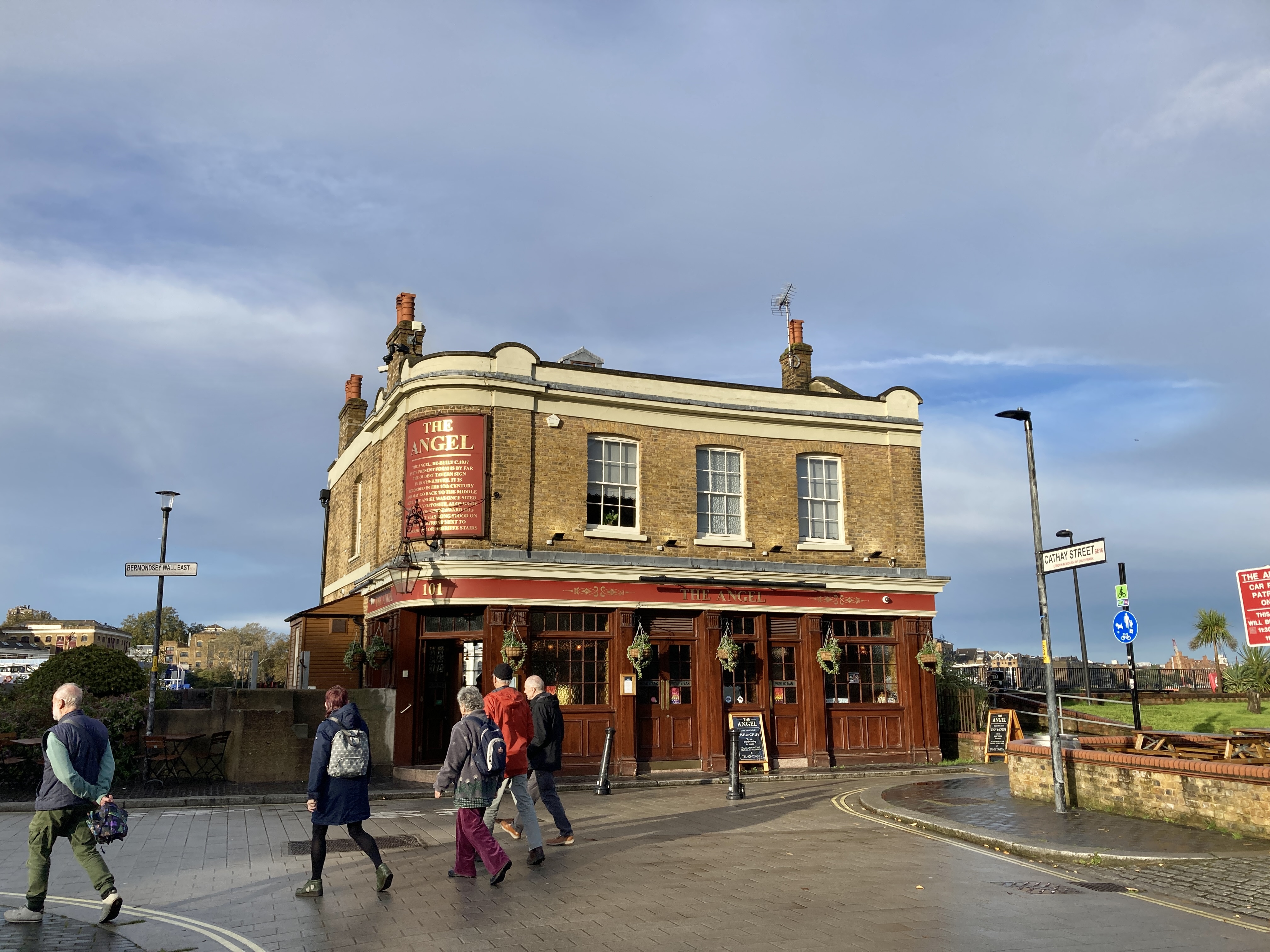
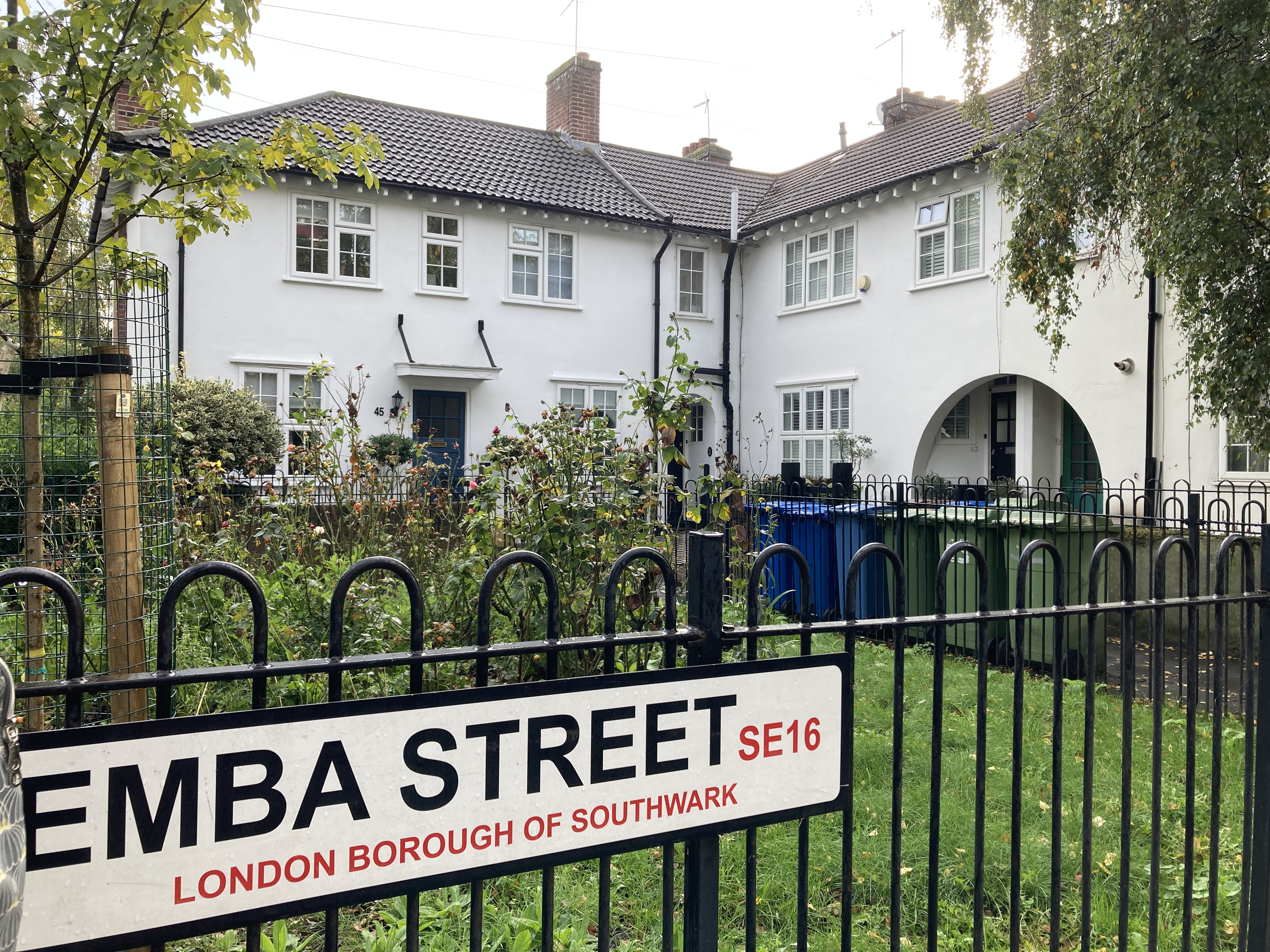
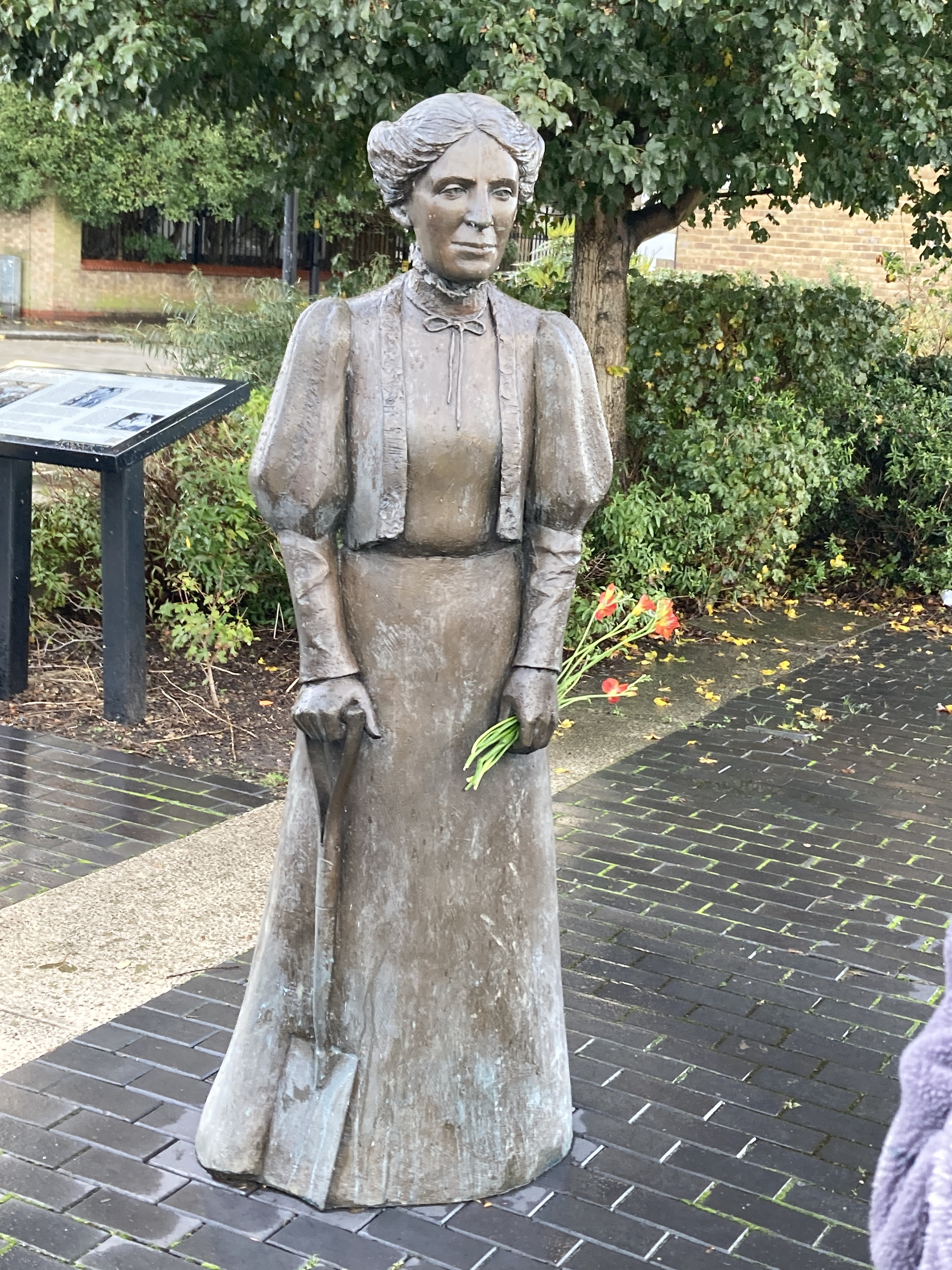
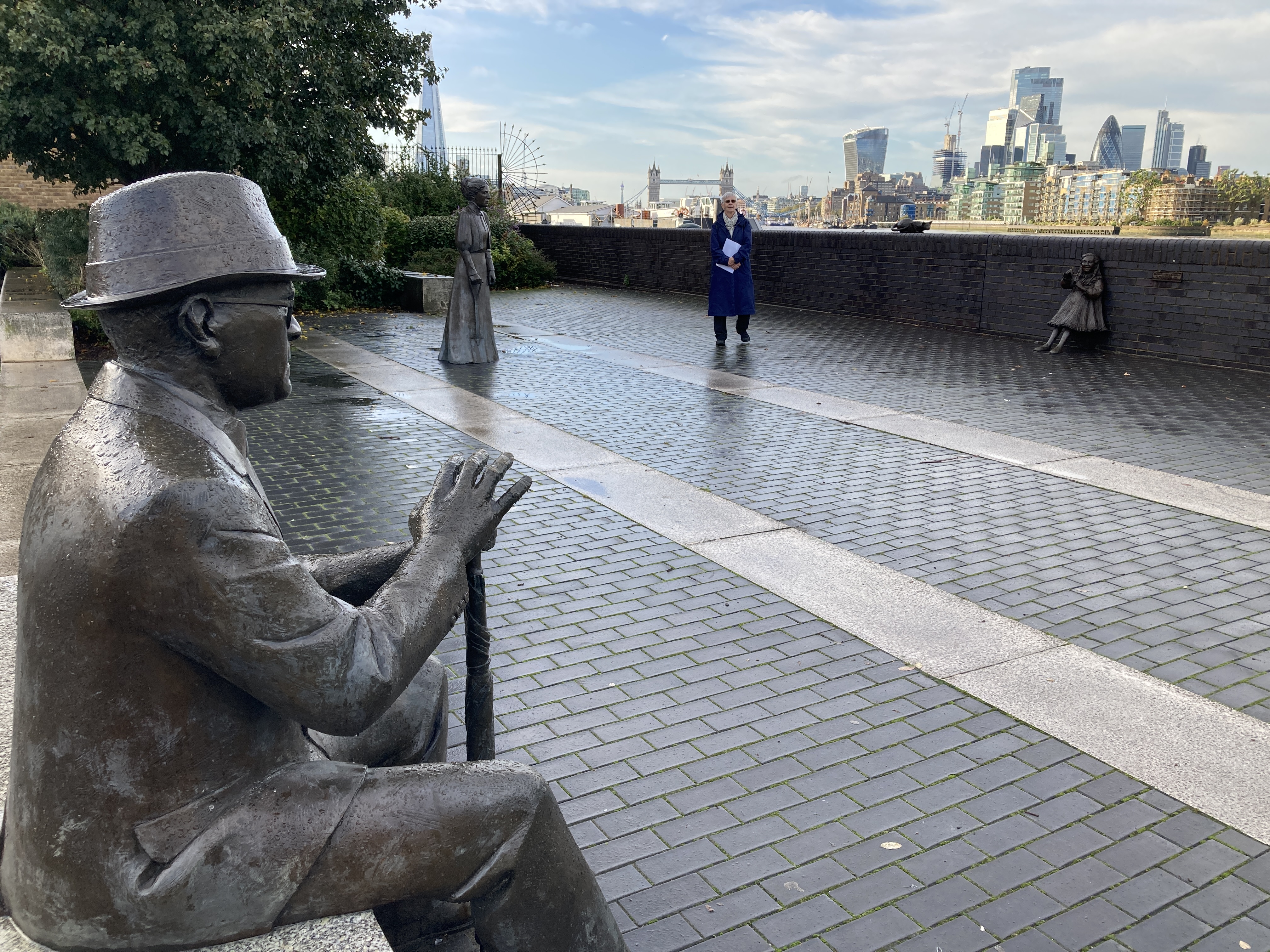
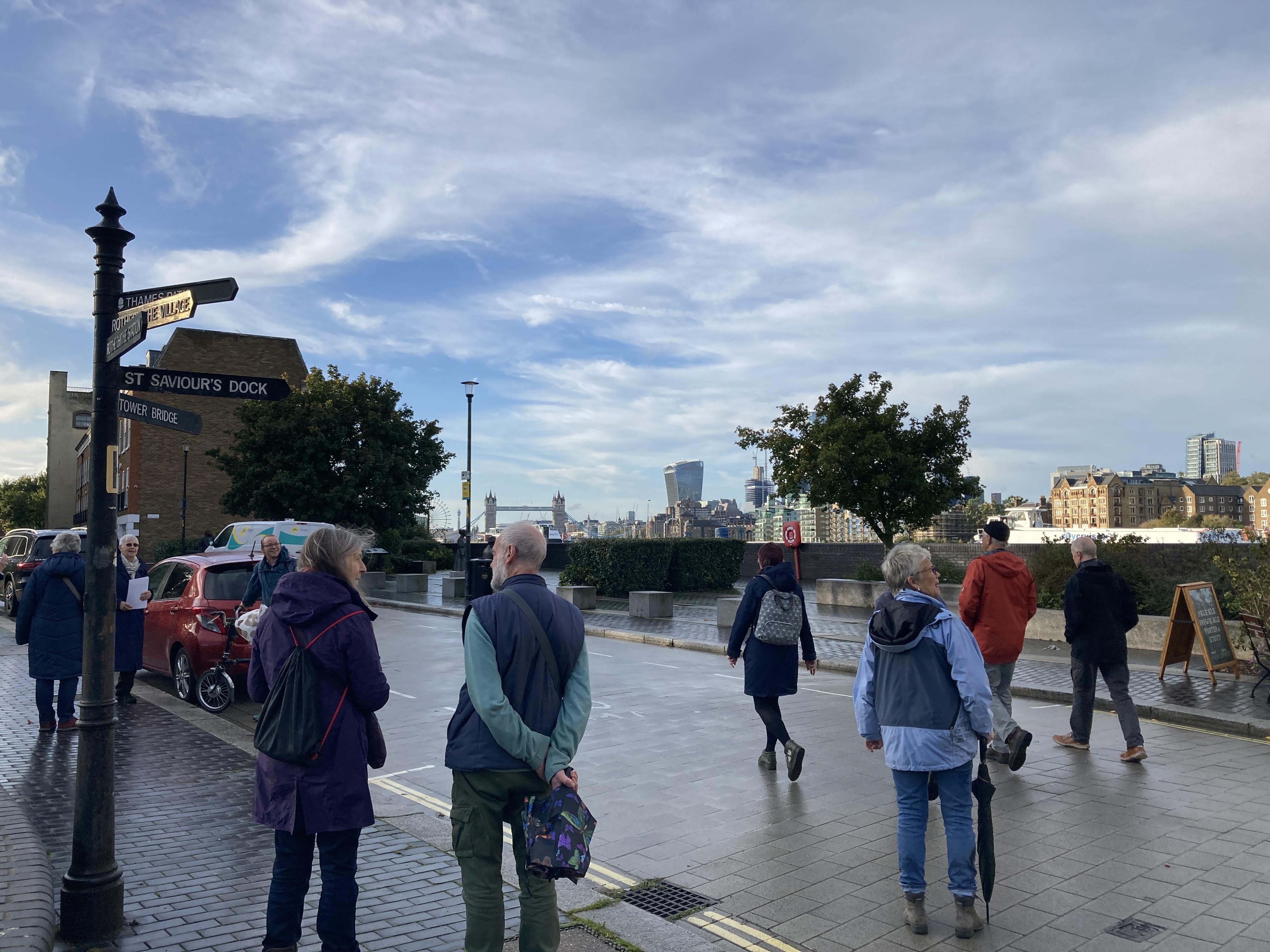
I can’t claim to remember much of the history at this remove from the event itself (October to January is a long time at my age), but I recall well the sights and locations of the day. First, a solo lunch at the friendly and atmospheric Gregorian pub on Jamaica Road, then the beautiful little garden suburb built by the Salters around Emba Street, and then on to the surprise of the open skies of the river at Bermondsey Wall, with the sculptures of the Salters and (bizarrely) the ruins of Edward III’s manor house, uncovered by the Luftwaffe.

Dance First

A biopic about Samuel Beckett. Not much on the glorious Godot, but ho hum. Nicely framed between an episode of SB fleeing the Nobel ceremony into a rocky cavey place where he discusses his life with himself. Good to see James Joyce, or someone portraying him anyway, and fun scenes showing Beckett’s work with the French Resistance in the war. Peter Bradshaw says it well: ‘tackling the paradox of Beckett’s bleak fictional universe of stymied inaction and his dramatic real life of service in the French resistance and romantic intrigue.’ I was expecting more about his work, his vision, the dark side as it were.

How they are related

Contemporaneous stories, more or less: the one – about a couple who engineer, through political and community action, the improvement of the poorest of Bermondsey (mainly the girls working in the many jam and biscuit factories along the Thames; their legs were covered with infected sores from all the rotting fruit on the floor); the other – a writer not, as his works, exploring the darkness of the human condition, but trying to find his way in the world and ultimately rejecting its accolades. The Salters, as can you see above, won, as did Beckett, accolades for their work in exposing the dark; our Quaker pair, didn’t only reveal oppression, but addressed it.

Posted in Film, Stuff, Walk | Tagged , , , | Leave a comment

The Old Oak; Killers of the Flower Moon

Now watched both of these twice; let’s see what comes of that.

The Old Oak

An earnest and often moving account of how white working-class people react to the moving in of refugee families from Syria. After initially rejecting the new people (a powerful and cleverly orchestrated title scene whereby camera stills are revealed as an integral part of the narrative), Ken Loach, through the friendship between the local publican and a Syrian photographer, shows the two communities coming together. Triggered by the news of the photographer’s father’s death at the hands of the Assad regime, this movement towards solidarity ends the film with a combined English/Arabic banner being paraded at the Durham Miners’ Gala. Durham Cathedral is Loach’s central image of working-class solidarity – ‘Look what working people can do when they do things together’, or wtte.

Killers of the Flower Moon

An earnest and often moving account of how white people systematically mistreat indigenous people whose land they have taken. After initially rejecting the indigenous people – giving them the worst land – they then, after the Osage become rich on account of the oil discovered there, work on getting the oil rights for themselves, through a policy of marrying into Osage oil families, and murder. Or at least some of them do: de Niro’s character ‘King’ Hale, and his sidekicks, including di Caprio’s dumbly amoral Ernest.

Part of Scorsese’s genius is that in his choice of one historical episode he can address 1) the US’s relationship with oil and 2) white America’s treatment of people of colour. He makes this explicit: the townsfolk of Fairfax watch a newsreel about Tulsa, and Molly later says, when the murders of Osage are at their height, ‘This is like Tulsa.’

How they are related

Both films are moral tales about the evils inflicted on the vulnerable by the powerful. Ken Loach’s evil is more sociological, an inevitable consequence of imbalanced power relations; Scorsese focuses more on individual evil, and how greed can drive into the commission of murder two different types of men – the dominant, alpha, ‘king’, and the naturally subordinate underling. Where does blame lie?

Both films revolve around a vulnerable female, a possible victim of male violence. And in both she is saved, in Flower Moon by her own efforts and initiative in summoning the FBI, in Oak by the friendship she builds with the pub landlord.

Lastly, both films have, as the mainspring of the oppression and evil which they explore, the ramifications of the fossil-fuel industry. The Osage have become rich on oil, and it is these riches which makes them vulnerable; the Geordie working class have lost their coal and are falling back in their poverty, and in the destruction of their culture, to xenophobia.

Yet the worlds of both films turn out OK. Molly lives, King Hale is caught; Yara’s family survive in the pit village, and the indigenous people eventually accept her.

Posted in Film | Tagged , , , , , , | Leave a comment

Merkel; The Great Escaper

Merkel

I think this was my first Curzon film watched at home. A pretty straightforward documentary about Merkel’s life and career, broadly uncritical/hagiographic.

The Great Escaper

A pretty straightforward biopic telling the true story of a D-Day veteran who missed the booking for the 70th anniversary jaunt to Normandy, but then did a bunk from his old people’s home and went anyway. That doesn’t sound so wonderful, but Michael Caine’s and Glenda Jackson’s performances, and the writing, make this a truly excellent film – lots of weeping. The scene in the bar when they meet some German veterans effectively channels Book 24 of the Iliad – the mutual salute between former enemies sounds corny now as I type this, but really wasn’t. Similarly powerful is the way the Caine character helps the recently-screwed-up-in-Afghanistan veteran. In fact one of the film’s central threads is how Caine’s character just sorts out other damaged people, from the young vet just mentioned to an alcoholic contemporary. The other thread I suppose is his response to war: his initial anger at the senseless loss (his visit is in part to place a fag packet at the grave of a dead comrade, flashbacks of whom pepper the piece) culminate in an angsty shout to the heavens about the waste; but this is nuanced, even corrected, by his wife, who, on their reunion, argues that the truth is more complex – yes – there’s the waste, but also true is their long, happy marriage.

The contingencies of our currently looking after aged parents, one of whom is in a nursing home, made this film, as we Quakers say, ‘speak to my condition.’ But it’s more than that. A truly great final film for Glenda, and perhaps also for Michael/Maurice.

How they are related

‘Germans, Fawlty!’ They’re not so bad after all. The long, happy relationship which ‘Mutti’ had with her people parallels Michael and Glenda’s; both sets of experiences came from the same conflict. ‘Nuff said.

Posted in Film, History | Tagged , , , , , , | Leave a comment

Fremont; Dumb Money

Fremont

In many ways a straightforward love story in the manner of many films (see Fallen Leaves), in which two separate working-class people, shat on by the system in different ways, meet each other by chance and begin to make a thing of it.

Dumb Money

The great Paul Dano (the lumbering saint Philip in War and Peace) plays another humble titan, this time a YouTube investor who leads a popular investor uprising which threatens the billionaires. The pivot of the drama is the pressure on the little investors to bottle out and sell: the uprising works if everyone sticks with it, but that’s not always going to be possible…

How the two are related

Both films celebrate the downtrodden, telling with humour and kindness stories of how sometimes they can triumph against the odds. Dumb Money, being a true story, has a more nuanced conclusion; Fremont more of a fairy-tale atmosphere and ending.

Posted in Film | Leave a comment